
The “Enough” Mindset: How to Want Less and Save More


If you’ve ever hit a money goal and still felt behind, you’re not alone. The truth is, saving more isn’t always about earning more—it’s often about needing less to feel okay.
The “enough” mindset helps you step off the comparison treadmill, spend with intention, and build savings without constantly feeling deprived.
This post will show you how to define “enough” for your life and turn it into simple, repeatable money habits.
- Define What “Enough” Means for You
- Spot the “More” Traps That Quietly Drain Your Money
- Create Your “Enough List” (The Simple Exercise That Changes Everything)
- Use “Good-Enough” Rules to Reduce Spending Without Feeling Restricted
- Common Mistakes That Keep You Stuck in “Never Enough”
- Turn “Enough” Into More Savings Automatically
Define What “Enough” Means for You

“Enough” isn’t a number you copy from someone else’s highlight reel. It’s a personal definition that matches your values, your responsibilities, and the life you actually want.
Here are a few questions to help you define it:
What does a “good life” look like for you (not for Instagram)?
Which expenses genuinely improve your daily life?
What financial stressors do you want to reduce first (debt, lack of savings, unpredictable bills)?
What’s your version of stability—3 months of expenses saved, 6 months, or more?
Your goal isn’t minimalism for the sake of it. It’s clarity—so your money supports your life instead of chasing someone else’s.
Spot the “More” Traps That Quietly Drain Your Money
Most overspending isn’t one huge mistake—it’s dozens of small “why not?” decisions that pile up.
Common “more” traps include:
Lifestyle creep: Spending rises automatically when income rises.
Convenience creep: Paying extra to avoid small discomfort (delivery, upgrades, add-ons).
Identity spending: Buying to feel like a certain kind of person.
Comparison spending: Spending to keep up, even subtly (brands, trips, home upgrades).

Try this mindset shift:
“More” is not the same as “better.”
Better is what makes your life calmer, healthier, and more aligned with what you care about.
Create Your “Enough List” (The Simple Exercise That Changes Everything)
This is where the “enough” mindset becomes practical.
Step-by-step: Build your Enough List
List your non-negotiables.
These are the things you’d protect even in a tight month (rent, groceries, therapy, childcare, basic transportation).List your high-impact joys.
A few spending categories that truly improve your quality of life (gym, one weekly takeout night, hobbies, travel fund).List your “nice, but not necessary” spends.
Subscriptions you barely use, impulse buys, trend purchases, and convenience spending that doesn’t actually help.Pick your “enough boundaries.”
Examples:
“I only upgrade my phone when the old one stops working.”
“I buy new clothes only when I can name the gap they fill.”
“I do one ‘big’ fun purchase per quarter.”
Your Enough List becomes a personal filter. If it’s not on the list, it needs a stronger reason.
Use “Good-Enough” Rules to Reduce Spending Without Feeling Restricted
You don’t need perfect discipline—you need decisions you can repeat.
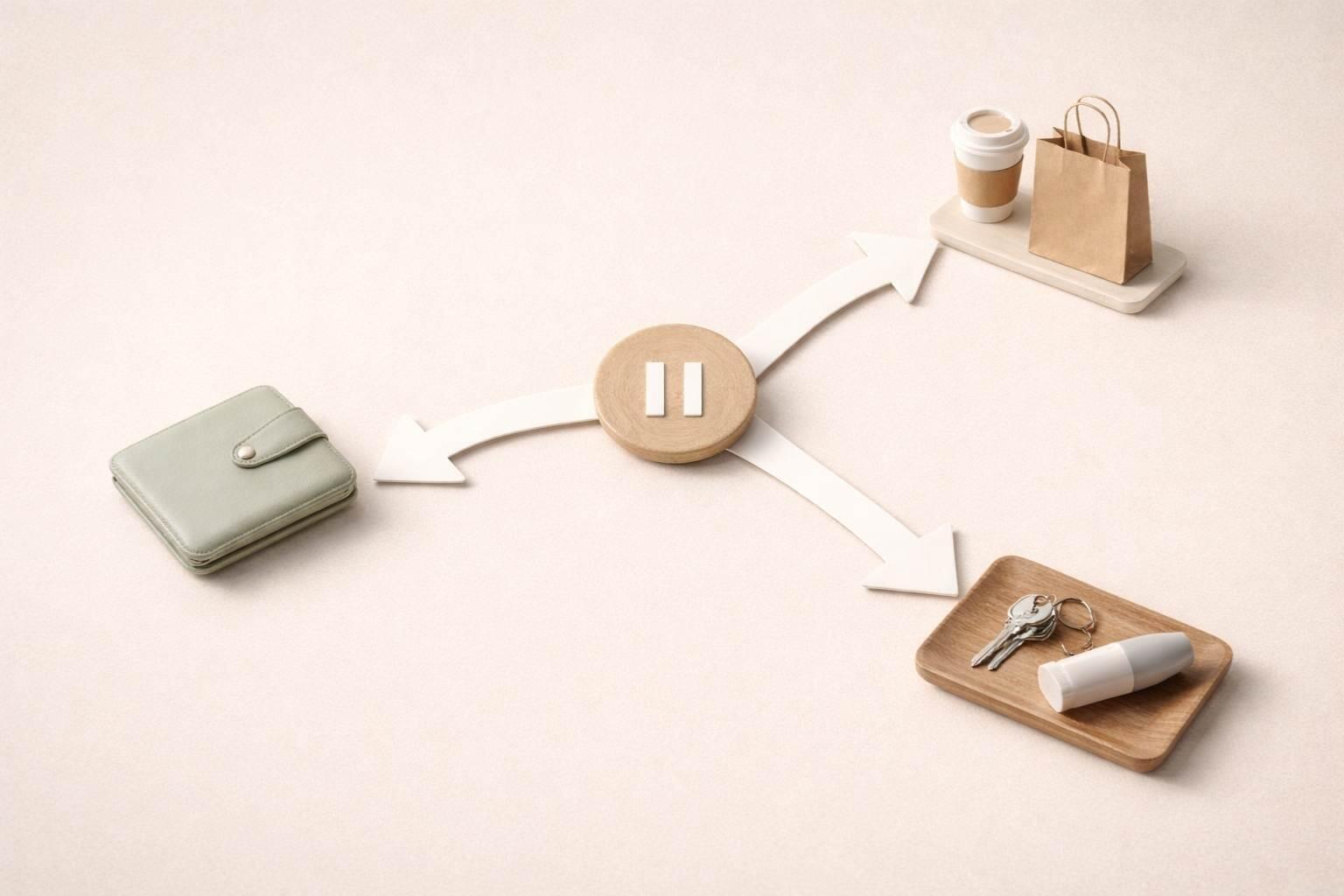
Try these “good-enough” rules:
The 24-hour rule: Wait one day before buying non-essentials.
The one-in, one-out rule: If you bring something in, something leaves (clothes, beauty products, gadgets).
The “already own” rule: Use what you have before buying a better version.
The “buy the gap” rule: Only buy when it solves a real problem in your life.
These rules work because they reduce decision fatigue. Less debating, more automatic calm.
Common Mistakes That Keep You Stuck in “Never Enough”
Even with the best intentions, a few patterns can pull you back into “more.”
Mistake 1: Trying to go from “spend freely” to “spend nothing.”
Extreme restriction usually backfires. Instead, aim for intentional swaps (cut what doesn’t matter, keep what does).
Mistake 2: Defining enough as “I should want less.”
The point isn’t shame. Enough is choice. You’re not “better” for wanting less—you’re freer.
Mistake 3: Not planning for fun
If your budget doesn’t include joy, you’ll seek it impulsively. Build in a small “life is happening” category on purpose.
Mistake 4: Thinking you’ll feel enough after one more milestone
This is the sneaky one. The finish line moves. Practice enough now, even while you’re building.
Turn “Enough” Into More Savings Automatically
Mindset is powerful—but systems make it effortless.
Pick one (or stack them):
Pay yourself first: Set an automatic transfer to savings the day after payday.
Use a “buffer” account: Keep a small cushion to reduce overdrafts and panic spending.
Create sinking funds: Separate mini-savings for predictable expenses (car repairs, gifts, travel).
Raise your savings rate when income increases: Save half of every raise (or even 25% to start).
If you want a simple starting point:
Automate one transfer (even $25/week). Then increase it once it feels normal.
The “enough” mindset isn’t about living with less—it’s about living with less pressure. When you define what matters, you stop buying distractions and start funding peace. Choose one small “enough rule” today, automate one savings move this week, and let consistency do the heavy lifting.
More tips for your financial journey